
How to Stop Puppy Biting: The 3-Step Method I Use
Pushing, yelping and ignoring all fail for the same reason: your puppy does not experience any of them as a consequence. Here is the sequence that works.
 By Ethan McMahon · November 17, 2026 · 8 min read
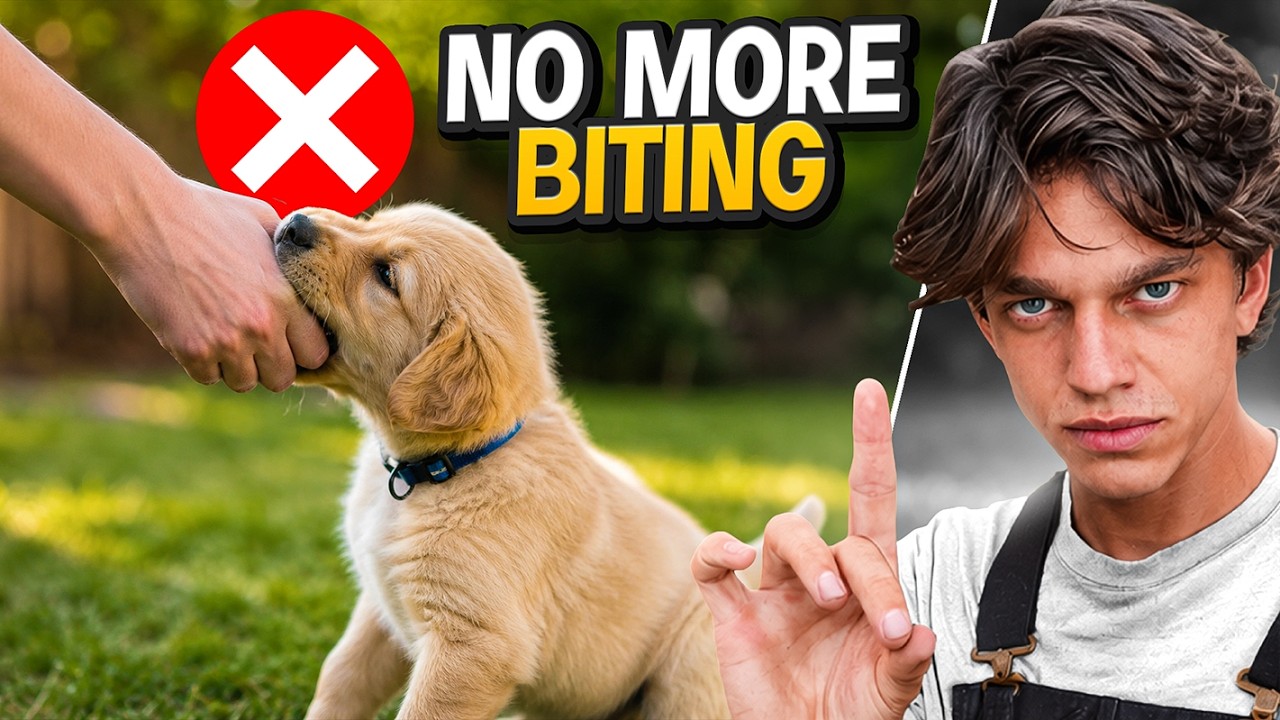
When you bring home a new puppy, the biting is the thing nobody warns you properly about.
They are cute and fluffy and you want to pet them. Your kids want to pet them. Your friends want to pet them. And every time a hand goes out, all that puppy wants to do is put teeth on it.
Or worse — you are not even trying to pet them. You are walking through your own house minding your own business, and a small land shark comes out of nowhere and latches onto your socks, your pants, your ankles, and starts trying to tear them off.
It is genuinely maddening, and it is the number one thing new owners call me about.
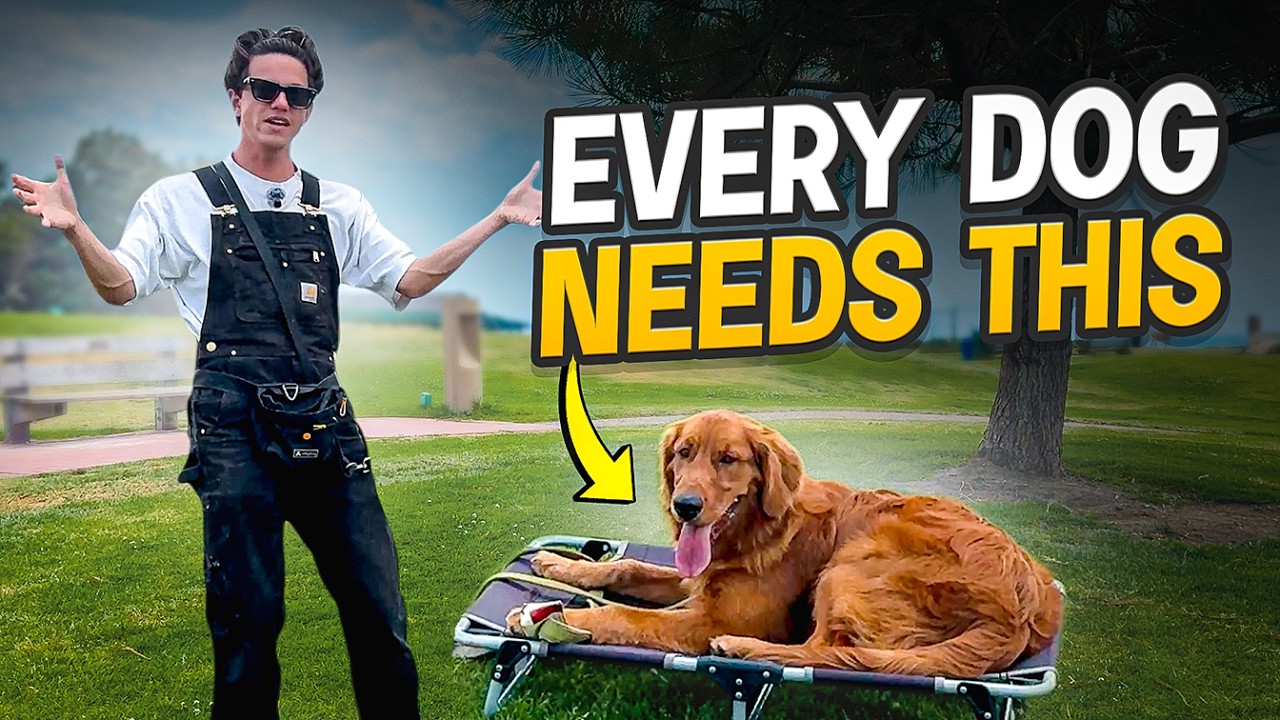
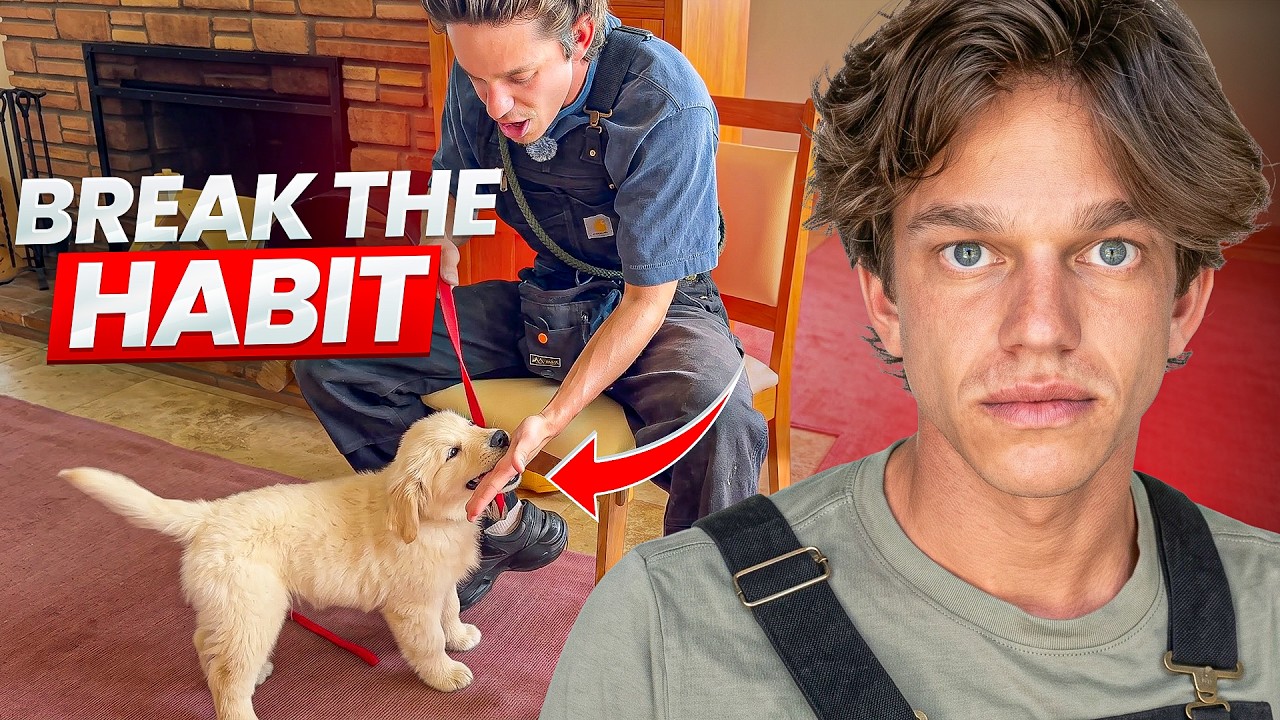
The dog in this one is Skye, a three-month-old Golden Retriever. She is one of the sweetest dogs I have worked with and she is a committed biter: hands, legs, anything. She also lives with kids and with grandparents, which means getting this under control was not optional.
First: why the usual advice fails
Training comes down to one sentence — reward the behavior you want, and put a consequence on the behavior you don't.
That sounds obvious. The reason so many owners get nowhere with puppy biting is not that they skip the consequence. It is that the thing they are using as a consequence is not experienced as one by the puppy.
Three common examples, and all three backfire:
Pushing them away. Dogs love to play rough. Puppies especially love to play rough with you. So when you put your hands on your puppy and shove them, they are having the best time of their life. Push, and they come back harder. Keep it up and the lesson your puppy learns is that biting you gets them touched and wrestled with — you have made the biting pay.
Ignoring it. You cannot simply ignore a set of needle teeth sinking into your forearm. If you try, you end up bleeding and being mauled by a baby animal, and nothing has been taught.
Yelping. This is the one I hear most, and it is the one I would most like to retire. Yelping usually excites the puppy and makes them think the game is on. It is a high-pitched, sudden, interesting noise from the person they most want to play with.
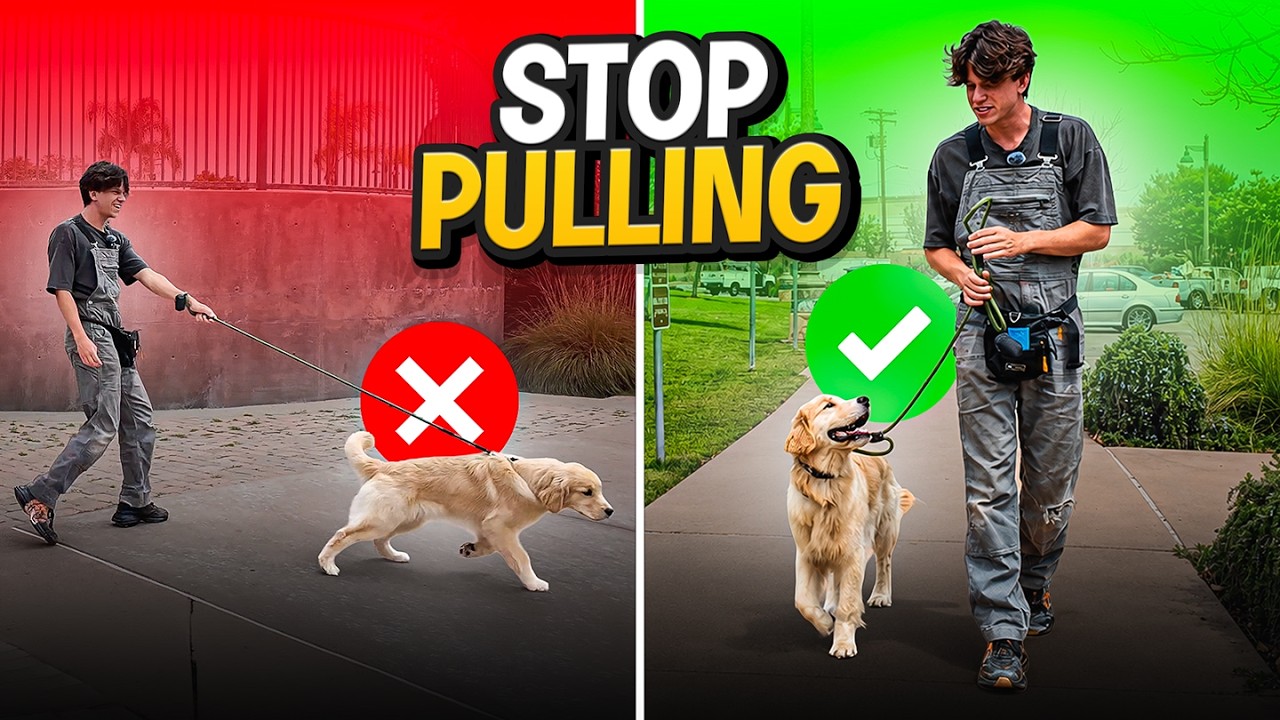
What actually works is creating distance — and doing it with the leash rather than your hands.
The three steps
Step 1: say "no" once, and use the leash to create space
The moment Skye goes to bite, I say no — once — reach for the leash, and pop her away from me as quickly as I can. Then I hold her there.
Two details matter enormously.
Speed. This has to be fast. A slow reaction gets absorbed into the game.
The word comes first. Say "no" immediately before you move the leash, every single time. I am not going to bore you with theory, but the mechanism is simple: your puppy learns that "no" means I am about to grab the leash and move you away from what you were doing. Stay consistent — one "no", then the leash — and within days that word starts doing the work on its own. That single word becomes the most useful thing you own.
Why the leash rather than hands: dogs do not like the feeling of being pulled away, particularly wearing a collar. It is not painful and it does not frighten them. It is simply not what they wanted, and it is something your hands cannot do without joining the game.
A practical consequence: keep a leash on your puppy whenever they are not in the crate, so it is always there to grab.
And a thing many owners hit: a lot of puppies respond to this by biting the leash instead. That is fine. Ignore it. Chewing the leash is not the problem you are solving.
Step 2: hold, and wait for calm — silently
This is the step people cut short, and it is the one that does the teaching.
Hold the leash out, be as still as you possibly can, and say nothing. Your puppy may bite the leash. They may jump, cry, whine, lunge back at you. Let all of it happen.
You are waiting for one thing: relaxation. Skye sat, and settled, and only then did I say yes.
In the video this looks almost instant, because short-form video for Instagram and TikTok has to be cut. In reality it took Skye about forty-five seconds — forty-five seconds of me standing there holding the leash while she wagged and whined and demanded to be played with.
The lesson being installed is a good one, and it goes well beyond biting:
I am not going to play with you or interact with you unless you are being polite.
Polite meaning: not biting, not barking, not doing the thing you were just doing.
Step 3: now redirect to a toy
Everyone has heard "redirect to a toy". It is half-right, and the missing half is the timing.
Do not hand over a toy at the moment your puppy bites you. If teeth land and a toy immediately appears, your puppy never learned that you objected to the biting. All they learned is that you are pleased when they bite toys — two completely different lessons, and only one of them stops your arms getting chewed.
There is also a harder truth underneath it. Some puppies simply prefer human skin to toys. I have worked with plenty who will take a toy, mouth it for one second, drop it, and go straight back to your arm. For those dogs, redirection alone will never work, because the toy is not winning on merit.
That is exactly why step one exists. The leash is the clear piece of communication that says: if you bite me, this is not going to go well for you. Not painful, not frightening, not ruining anyone's day — just mildly unpleasant and reliably so.
And then the other half of the message, which has to be just as loud: if you put your mouth on a toy, I will love you up all day. When Skye has that toy, I am petting her, praising her, telling her she is the best dog in the world. That contrast is the whole method.
The bonus exercise: teaching a puppy to be petted
There is one more piece, and for puppies who bite at approaching hands it is the thing that changes the most.
Goldens love having something in their mouth, so Skye drops the toy and goes for my hand — the hand is just the nearest available object. The fix is to make hands mean something other than play.
Here is the exercise:
- Nestle a high-value treat into your hand, held between your thumb and fingers. I use freeze-dried duck.
- Let your puppy lick at it, working to get the treat out.
- While they lick, run your hand over their head, again and again. Take hold of their neck gently, give it a little pull, keep touching them.
Do it twice a day, three to four minutes at a time.
What you are doing is desensitizing a puppy who is sensitive to hands arriving, and whose default answer to a hand is teeth. Instead of biting the hand, they are licking food — and being touched the entire time.
The reasoning behind why this works is worth knowing:
When a dog is playing, they are not thinking about food. When a dog is eating, they are not thinking about play. Those two parts of the brain come on one at a time.
Food is the calmer of the two states. Connect being touched to that state rather than the play state, and your puppy bites you far less — not because they are suppressing it, but because hands stopped meaning "game on".
Do it in this order
The steps are not interchangeable and the order is the method:
- "No" — then the leash, immediately, creating space.
- Hold and wait — silent, still, until genuinely calm.
- Toy — and then all the affection you have.
Plus the hand-desensitizing exercise twice a day, which does its work in the background.
Run that consistently and the biting drops off quickly. Most of the owners who tell me it "doesn't work" are redirecting at step one and skipping step two, which produces a puppy who thinks biting is how you ask for a toy.
Keep reading
If you are redirecting to toys and your puppy still goes for your hands, these two go deeper on exactly that:
- My puppy wouldn't stop biting me until I changed these 3 things — including the one that is not about technique at all
- What puppies should actually be chewing — when the toys themselves are the problem
And the step-by-step version, with the lessons:
Common questions
Why does yelping not stop my puppy biting?
Because to a puppy, a yelp sounds like play. The advice comes from watching littermates, but a human yelp is high-pitched, sudden and interesting — it usually winds a puppy up rather than calming them. Most owners who try it report the biting gets worse.
Should I push my puppy away when they bite?
No. Puppies love to play rough, so hands on them is the best possible outcome from their point of view — you push, they get more excited, and you are now wrestling. You have rewarded the biting with contact and taught them that teeth on skin starts the game.
When should I redirect my puppy to a toy?
After they have calmed down, never at the moment they bite you. Handing over a toy the instant teeth land teaches one thing only: that you like toy-biting. It never teaches that you disliked the skin-biting, because nothing happened about it.
My puppy bites the leash when I pull them away. Is that a problem?
No, and it is very common — plenty of our clients report it. Let them. Chewing the leash is not the behavior you are trying to fix. Ignore it completely and keep going; the leash-biting fades once the whole routine becomes predictable.
How long does it take for a puppy to calm down?
Longer than short-form video suggests. Skye took about forty-five seconds of me standing completely still and silent while she whined, wagged and demanded to be played with. The first few repetitions are the long ones; after that it gets much faster.
Want this as a plan, not an article?
Boop gives you Ethan McMahon’s filmed curriculum in order, daily homework for your dog, an AI coach that answers in his words, and a live call with him every week.
The whole thing in one place: why the usual advice backfires, the six-step method on video, and the ten-minute exercise that stops it at the source.
Read the guide