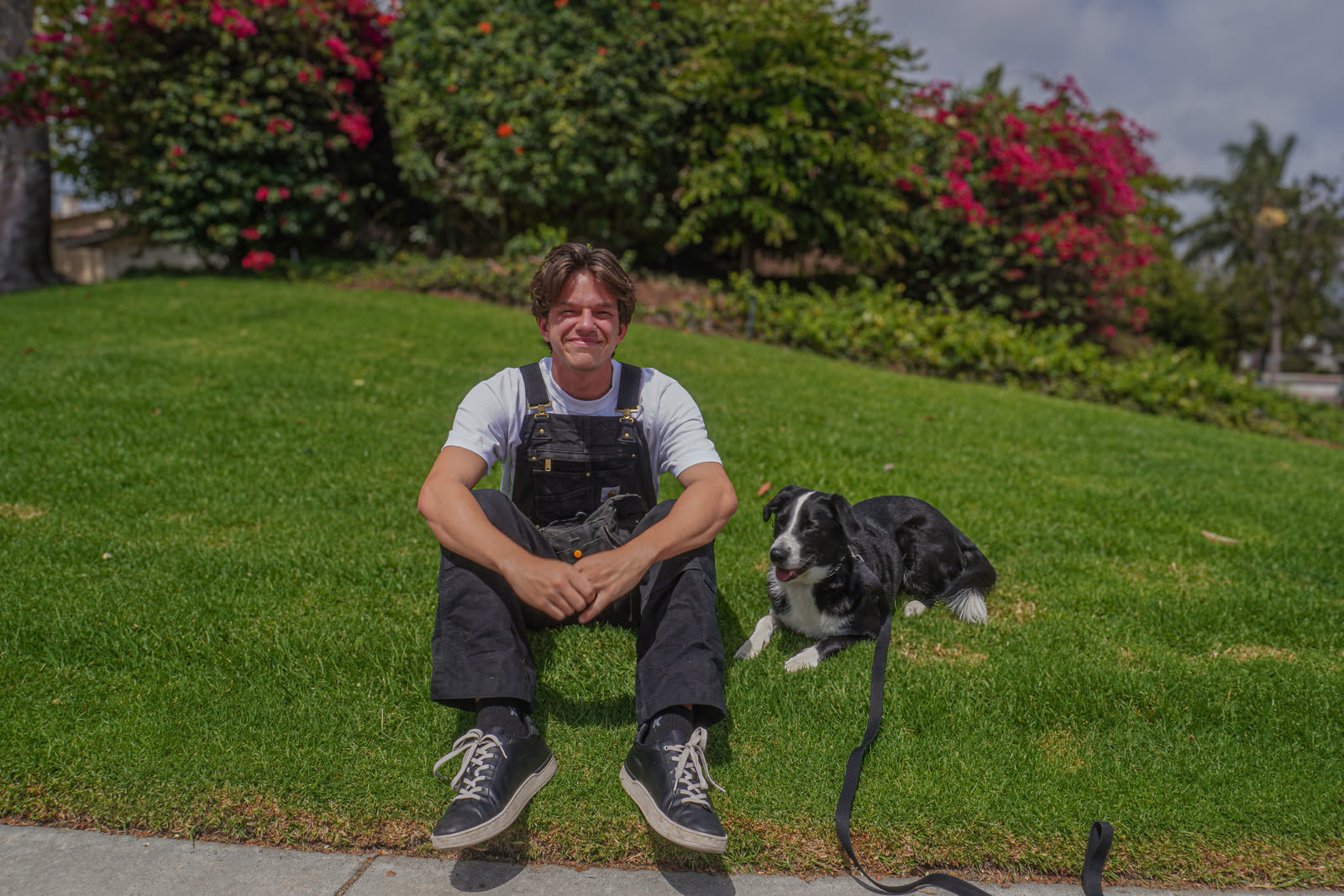
The leash is not optional
It is the whole method, not a prop. The leash has to already be on — not fetched while they are hanging off your sleeve.
“This leash, whenever Sky's not in the crate, you've got to keep the leash on at all times.”

Your hands are covered in scratches, the children are frightened of them, and every article says to yelp. Here is what a trainer actually does — and why the usual advice makes it worse.
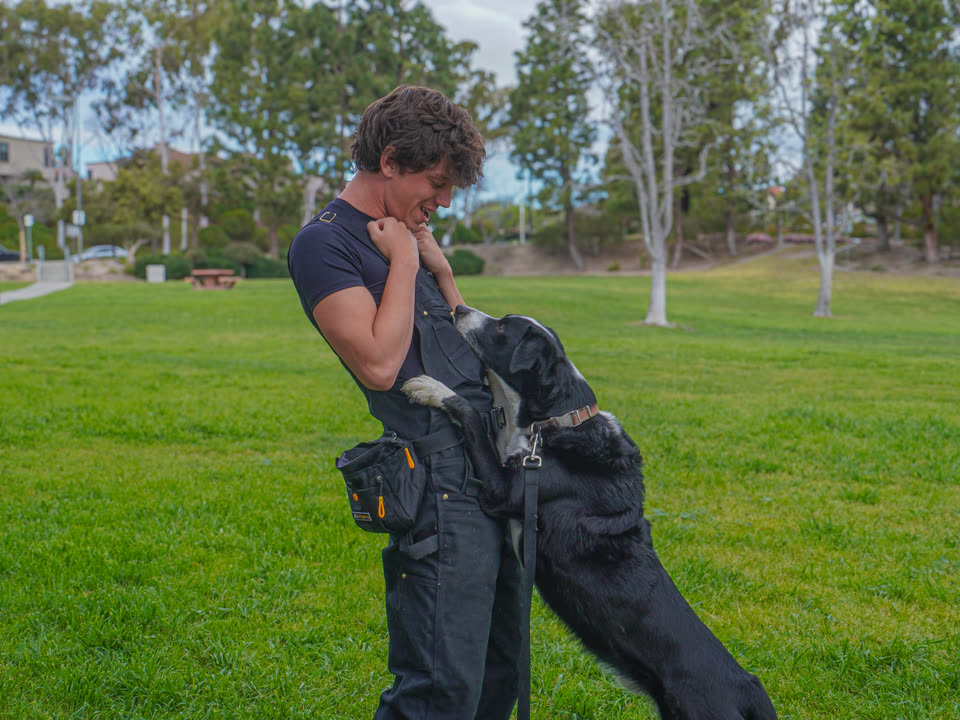
Not to stop them biting things. To stop them biting you.
Six moves, in this order, every time. The rest of this page explains why each one works.
A puppy's mouth is its hands. It is how they pick things up, test what something is and talk to each other, and it arrives with no instruction manual for living with people.
When puppies are in the litter, all they do is bite each other. Teddy gets bit and then he bites back, and that is how they communicate. So when we put him in a human home and humans start touching him, he just bites — because that is all he knows.
Two things follow from that. The first is that nothing is wrong with your puppy: a land shark is a normal eight-week-old, not a warning sign. The second is more useful — biting is a conversation, so it responds to an answer. Shouting is not an answer. Neither is pain. What works is making the one thing they want, your hands, reliably stop being available the moment teeth arrive.
Most common 8 wk – 5 mo (teething). Adolescent mouthing: same protocol.
Every one of these is standard advice somewhere. Every one of them rewards the bite.
The one thing you can never do when she bites you is touch her. Dogs love to be touched. I could shove Sky to the ground and look — she will come right back to me. We make the mistake of saying “no, no” and pushing, but they like when we do that. So we are rewarding the biting.
This is the sequence Ethan runs with every bitey puppy he is handed. It is not a trick and it is not one session — done with the right timing it happens less every day.
The leash is your lifeline — you can’t touch a puppy with your hands without rewarding them.
That’s your first reaction, before anything else.
Too close to the neck and they swing round and bite you. Hold until they relax — they don’t need to sit or lie down.
Pressure on = biting; pressure off = calm.
Shove it in their face and antagonise them with it if they’d rather have your hands.
Done with correct timing it happens less every day. Not a one-session fix.
Then it is almost certainly not your technique. These three separate the owners it works for from the owners it does not.
It is the whole method, not a prop. The leash has to already be on — not fetched while they are hanging off your sleeve.
“This leash, whenever Sky's not in the crate, you've got to keep the leash on at all times.”
Said no, led them away, offered a toy — and they come straight back? Stop training and crate them. An overtired puppy cannot be reasoned with.
“If you find that redirecting is completely impossible, chances are she needs a nap.”
A puppy chews to feel something giving way. A rubber bone that never changes is less interesting than your hand.
“He doesn't want the toy as much as he wants your hands. That's because most dog toys suck.”
Everything above handles a bite that is already happening. This reduces how often they happen at all — and almost nobody does it. Your puppy is sensitive to being touched, so you teach their body that hands are boring.
Twice a day. Not one ten-minute session.
The redirect only works if what you're holding beats what they were chewing. One rule decides it: it has to wear down.
A tempered wooden stick that visibly wears down as they work at it — so they keep coming back to it, not you.
From about three months. Use a holder — it screws the end in place so the last piece cannot be swallowed whole.
Stuff it, freeze it, hand it over before the biting starts. It gives way as they lick, which is the whole point.
Constant mouthing, no bite inhibition at all. Start the protocol now; this is the cheapest it will ever be to fix.
Teething. The worst of it, and the point most owners go looking for help. Adult teeth are coming through and it genuinely hurts.
Adult teeth are in. Biting should be fading fast if the protocol has been consistent. If it has not, it is usually sleep or an untrained redirect.
Mouthing at this age is a learned habit rather than teething. Same method, and it still works — it just takes longer to undo.
Children are the worst possible target: they are small, they squeal, and they move fast — which is three separate invitations to a puppy. The protocol does not change, but an adult has to hold the leash. Have the children stand still and fold their arms while you lead the puppy away, so the puppy never learns that running makes the game better.
This is herding and prey drive rather than teething, and it is always worse when you walk away. Stop moving. Say no once, take the leash, lead them off your leg, and wait. Walking on while they hang off your trousers is the one thing that teaches them it works.
Owners call this the witching hour and it is almost always sleep. The house is busiest in the evening — television on, dinner cooking, people in and out — so the puppy who most needs to switch off is the least able to. Crate them before it starts rather than after.
Because a hand snatched away at speed is a moving object, and a moving object is prey. Slow hands are boring; fast hands are a game. Leave the hand still and move the puppy with the leash instead.
Everything on this page is about a normal, mouthy puppy. Stop and get a trainer or your vet in person if you see:
Because to a puppy, a yelp sounds like play. The advice comes from watching littermates, but a human yelp is high-pitched, sudden and interesting — it usually winds a puppy up rather than calming them. Most owners who try it report the biting gets worse.
No. Puppies love to play rough, so your hands on them is the best possible outcome from their point of view — you push, they get more excited, and now you are wrestling. You have rewarded the biting with contact and taught them that teeth on skin starts the game.
After they have calmed down, never at the moment they bite you. Handing over a toy the instant teeth land teaches one thing only: that you like toy-biting. It never teaches that you disliked the skin-biting, because nothing happened about it.
Biting is most intense from about eight weeks to five months, while the adult teeth come through. It eases after that, but only if the puppy has been taught what to do instead — an adolescent dog that still mouths needs the same protocol, not more patience.
Almost never. The mouth is how a puppy handles the world, the way a baby grabs at everything with its hands. In the litter they bite each other all day and get bitten back, and that is the only conversation they know when they arrive in a house full of people touching them.
Expect a couple of weeks of consistency rather than one session. Done with the right timing it happens less every day, and the change you notice first is usually that they stop and look at you before they bite instead of after.
Usually because of what each of you does at the moment teeth land. Whoever pulls their hands back fast, pushes, or keeps talking is the more interesting one to bite. The protocol only works if everyone in the house runs it the same way.
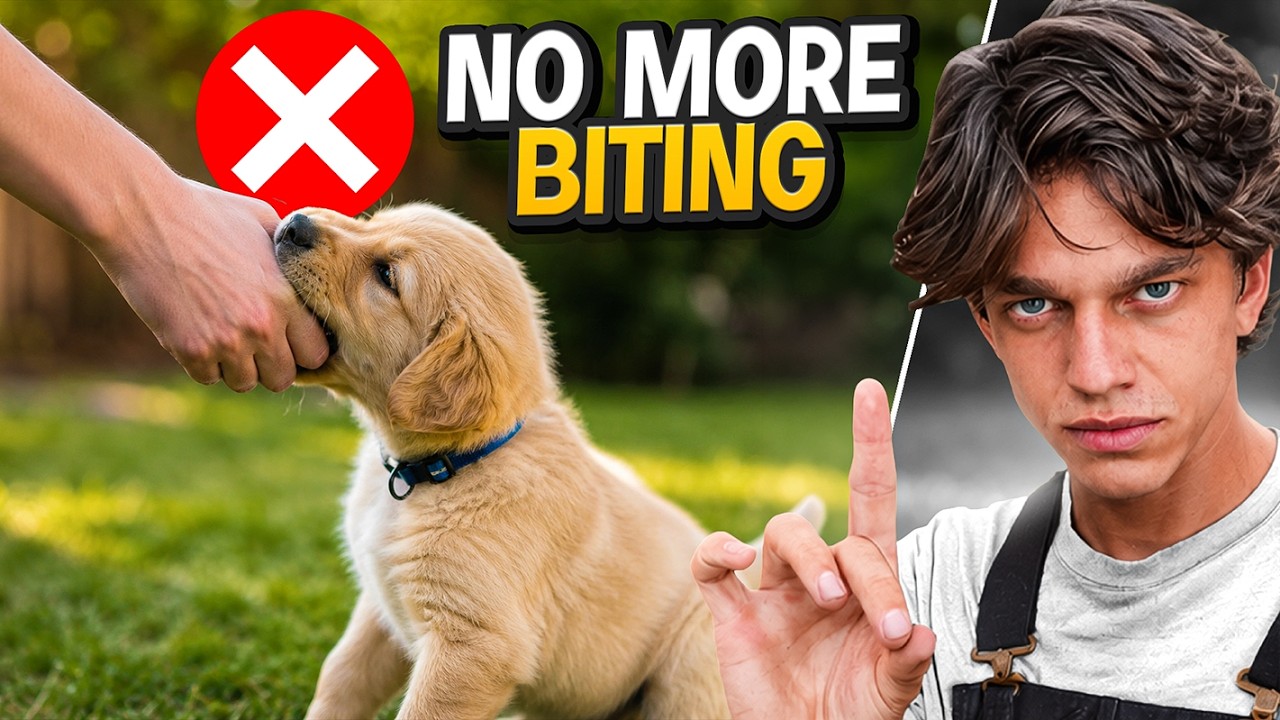 Video
Pushing, yelping and ignoring all fail for the same reason: your puppy does not experience any of them as a consequence. Here is the sequence that works.
Read it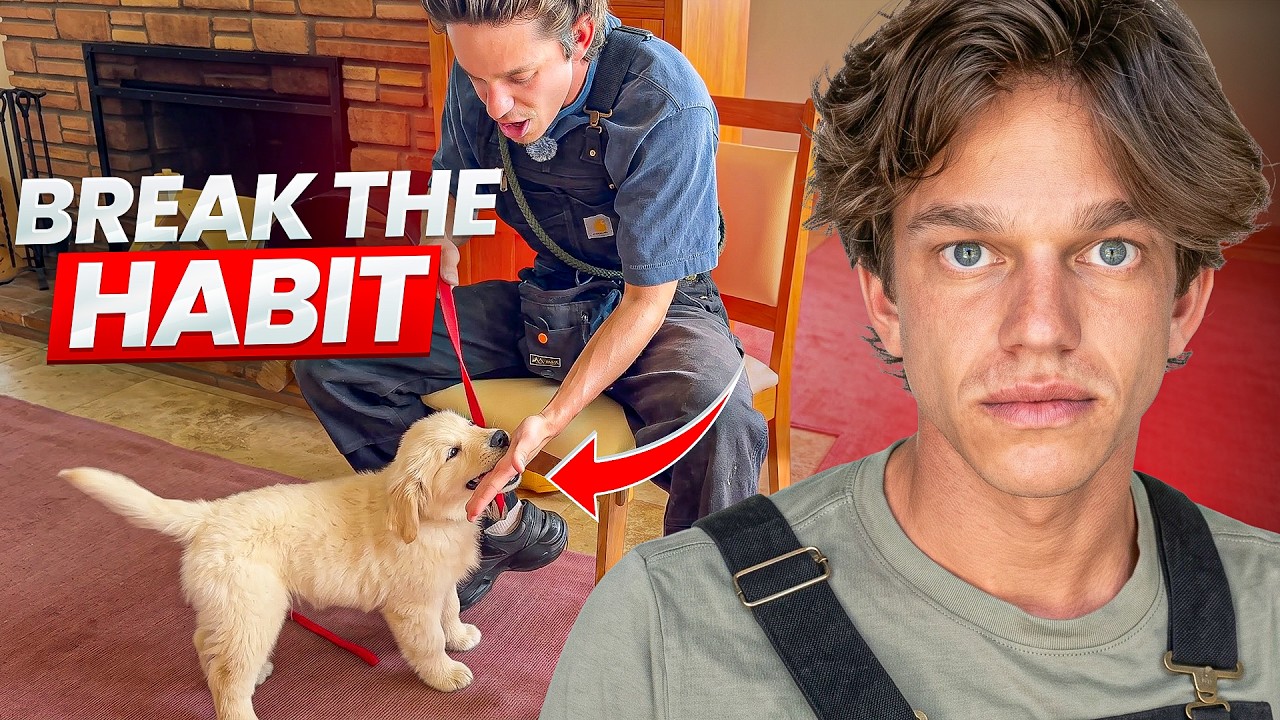
Already saying no and redirecting to a toy, and your puppy still comes back at your hands? You are probably missing the one that is not about technique.
Read it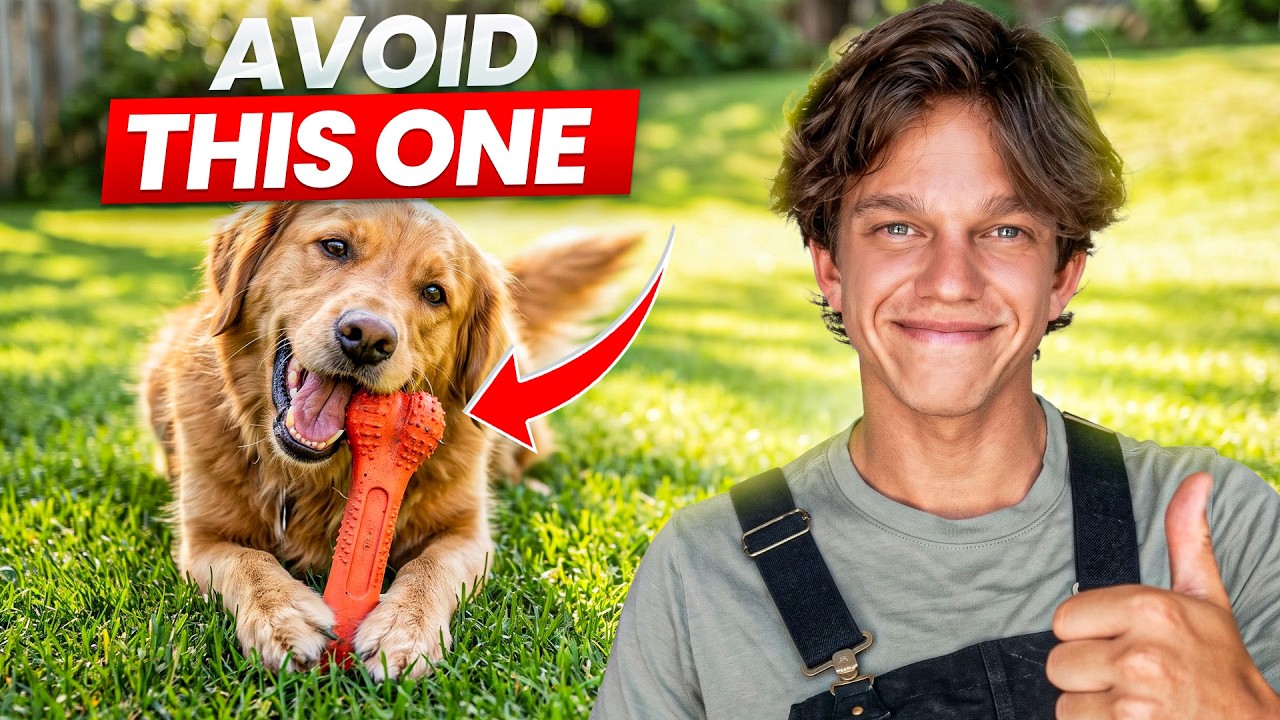
Your puppy takes the toy, chews for a minute, then goes back to your pant legs. Usually the toy is the problem: a chew that never wears down is boring.
Read itPuppy biting is one of fifteen problems in the Academy.
Cancel in two clicks. First 30 days free.