
How to Fix Leash Pulling in Under 15 Minutes
Dogs pull because pulling works. The setup, the two drills and the one release cue that turned a six-month-old Golden into a loose-leash walker in ten minutes.
 By Ethan McMahon · November 21, 2026 · 9 min read
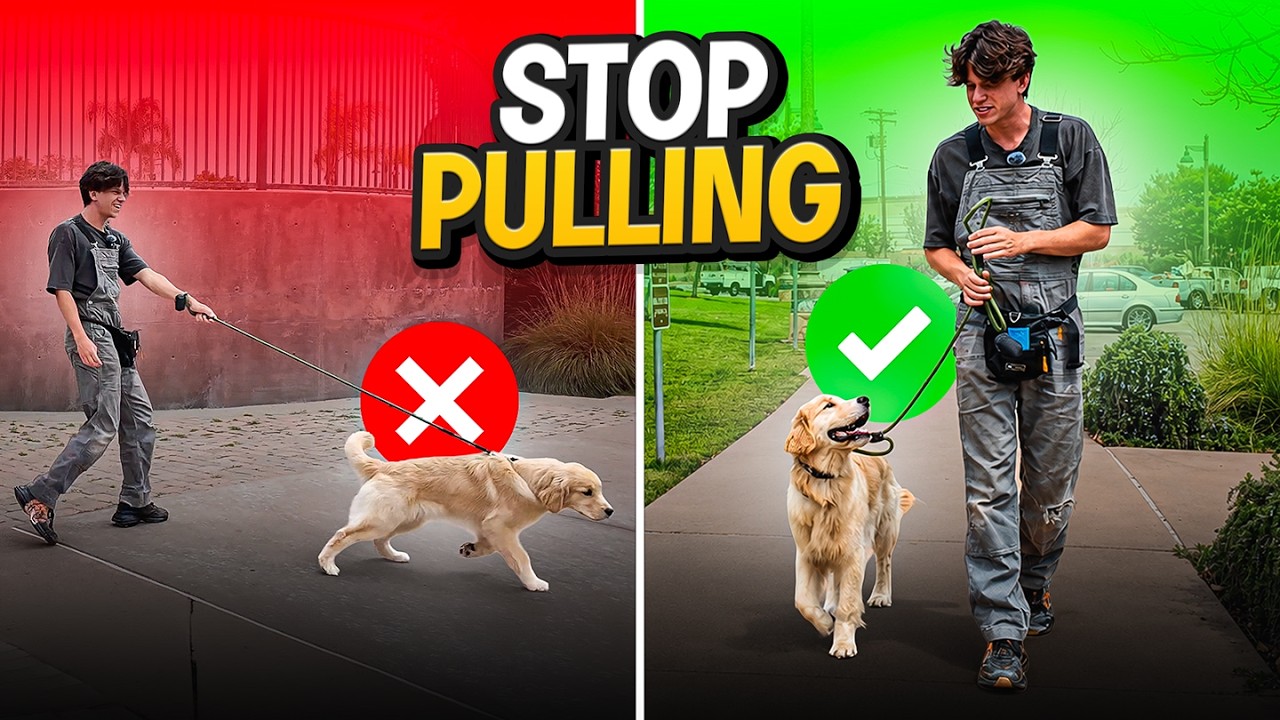
If your dog is hauling you down the street on every walk — constant tension on the collar, coughing, choking, you barely walking at all — this is the sequence I use, and it works on a dog of any age.
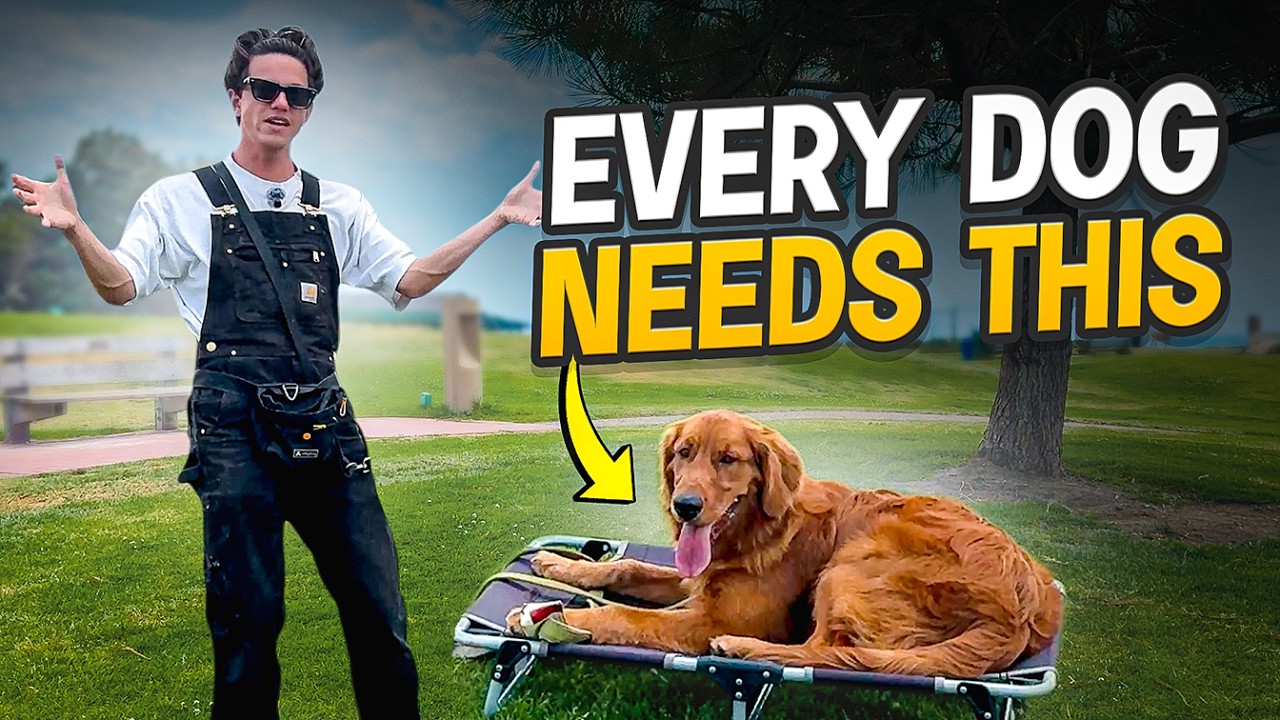
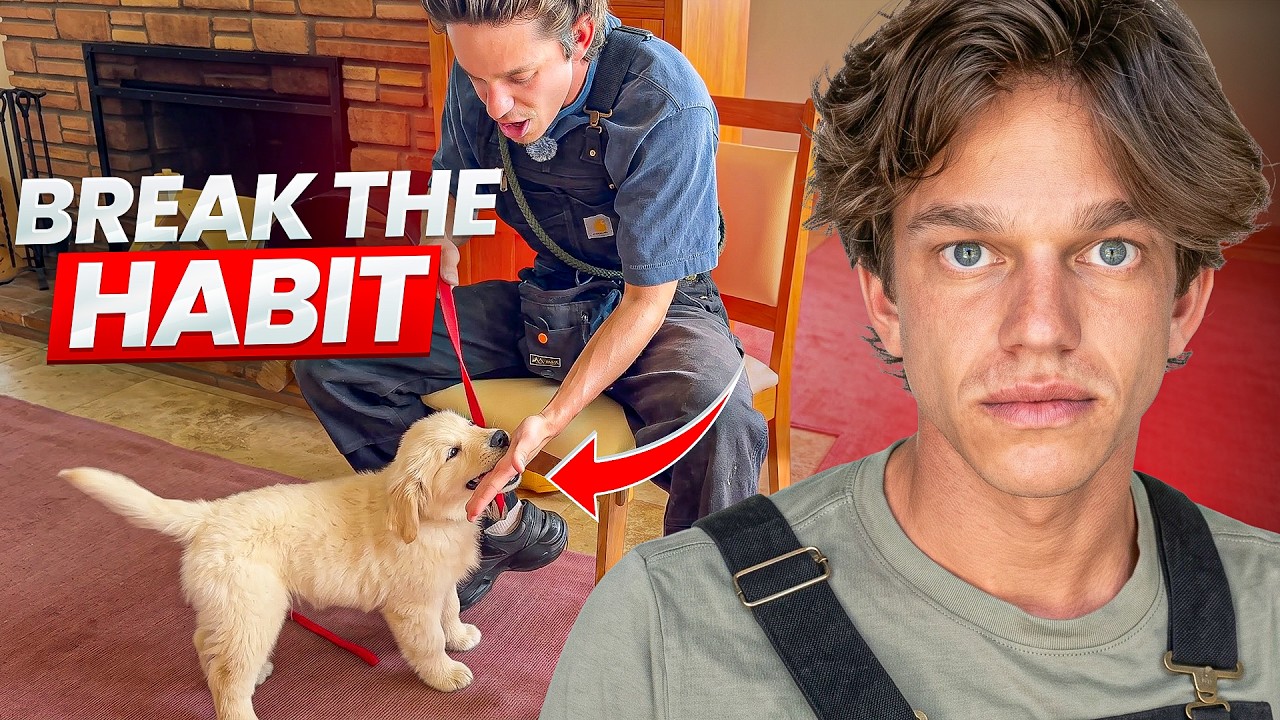
The dog in the video is Olive, a six-month-old Golden Retriever, and she is a committed puller. By the end of about ten minutes of this she is walking on a loose leash beside me.
Before any of it, though, there is a setup step people skip, and skipping it makes everything afterwards harder.
Get the dog empty and settled first
Take your dog outside for a few minutes beforehand and let them sniff and do their business. Let them pee, let them poop. Then come back in and play for a minute or two to take the edge off.
Trying to leash train a dog who badly needs the bathroom goes exactly as well as you would expect. If you needed to go, and you were trying to get there, and somebody kept telling you to slow down and walk nicely — we all know how that ends.
Training starts with an empty dog.
The equipment, and why each piece matters
If you have the wrong leash, the wrong collar and the wrong treats, none of what follows will work. Not "will work less well" — will not work.
The leash: no stretch, six feet, flat
Whatever leash you use, pull on it and check that it does not give.
A lot of the rope-style leashes sold in pet stores have a real stretch to them, and that stretch quietly ruins your training. Think about it from the dog's side: your dog pulls, and the leash gets two inches longer. They felt that. They just got paid — a small amount of extra freedom, delivered the instant they pulled.
If I am on a bungee and I want to get over there, and pulling makes the line longer, then I will pull every single time. Of course I will. It works.
Use a six-foot flat nylon leash. The tightly woven flat ones do not stretch, and they will take far more force than your dog can produce.
The treats: real food, not pet-store training treats
Everyone talks about "high-value treats" and nobody says what that means, so here it is: for outdoor training I use genuinely high-quality dog food rather than the training treats on the shelf at a big pet store. Most of those are built on vegetable glycerin and fillers, and they are not doing your dog any favors nutritionally.
What I look for is something that is actually food — a fresh or air-dried food you can break into pieces. It should be stinky and slightly gross. Olive checks the floor afterwards to make sure I have not dropped any; that is the bar.
A practical benefit: if the food is real food, then handing over a lot of it during a session is not a problem. Cut back their regular meal a little and the day still balances out. You cannot do that with a bag of candy.
The collar: this is the honest bit
A flat collar is often not effective for this, and I want to show you why rather than just assert it.
When you pull a flat collar, there is a large gap at the throat and all the pressure lands on the trachea. With Olive — a Golden, with a thick, blubbery neck — I can pull on that collar and she genuinely does not care. She will not even move away from me. If anything she pulls back harder.
That is opposition reflex: pull a dog, and the dog pulls back into it. It is wired in, and a flat collar on a strong dog is a poor tool for arguing with it.
So if you are pulling on your dog's flat collar and all that happens is choking, that is the moment to talk about equipment. For Olive, at six months, I use a 2.25 mm prong collar — fitted high on the neck, right behind the ears, with the leash on the small ring.
Two caveats I will not skip over:
- Young puppies: don't. At three months, stay on a flat collar or a slip lead. The prong recommendation starts at about four to five months.
- Used wrong, a prong collar hurts a dog. That is true and I am not going to pretend otherwise. What you will see me do is pull very gently and immediately show food. The goal is a dog who understands a signal, never a dog who is afraid of their collar.
Equipment law differs by country and by state, and your vet or a local trainer who can see your dog is a better guide than any article. If a prong is not something you want to use, the two drills below still work — they just take longer, and the mechanics matter more.
Why your dog pulls
One sentence:
The only reason dogs pull on the leash is because it works.
Your dog pulls, you follow, and the pull earned distance. That is the entire loop, and everything below is about breaking it.
Drill 1: teach them to follow pressure instead of fighting it
Start walking and pay close attention to one thing — your dog's speed relative to yours.
The moment they are moving faster than you, stop. Lean your body weight in the opposite direction. Do not yank with your arms; brace, and let their own momentum meet the leash.
When they come back to you, say yes and give them food.
That is the whole drill: stop, gentle pressure, yes, reward. Then walk on and do it again at a random moment.
People ask why we are rewarding the dog right after they made a mistake, and it is a fair question. You are not rewarding the pull. You are conditioning one specific thing: when you feel pressure on your neck, do not fight it — follow it. The reward lands on the following, not on the pulling that preceded it.
Watch for what the dog's face is doing while you do this. Olive is not frightened and she is not in pain — she is looking at me attentively, waiting for her reward. That is what correct looks like. If you are seeing fear, stop and get a trainer to look at your mechanics.
Give plenty of verbal praise alongside the food. I want her to know I love it when she comes back to me.
After a handful of reps, the fighting stops. She feels the pressure and comes to me, because that is now what pressure means.
Drill 2: quick, unexpected U-turns
You cannot hand out treats forever. The goal is not a dog who bounces back to you repeatedly — it is a dog who simply stays next to you.
So once the pressure conditioning has landed, swap the reward for a turn.
Olive drifts ahead. Instead of stopping and treating, I simply turn and walk the other way.
Three things make this work:
- Only when the leash has drifted, never when it is already taut. Wait for the slack to appear, or ask yourself honestly whether your dog is paying attention to you right now. If the answer is "kind of" — that is your moment.
- The reward moves earlier. Now I only pay her if she looks at me before the turn. Checking in gets food; needing to be told does not.
- You lead the walk. When I stop, Olive stops. That is not about being dominant over your dog and it is not about being better than them. It means: when I go this way, I need you to come too.
And on mechanics again, because it is where people go wrong: I am not yanking or cranking my arms. When I stop, I brace and lean into the dog, so that if she makes a mistake she meets the correction, and if she does not make a mistake, nothing happens at all. The dog controls whether there is any pressure. That distinction is the entire difference between training and nagging.
Honestly? Leash training is boring. It is turns, and circles, and teaching one idea over and over: when I go this way, you follow. Ten minutes of that and Olive is walking beautifully.
Give the walk two modes
A walk is not only heeling. You want your dog to sniff, investigate, and be a dog. So put that on cue, and take it back on cue.
"Go sniff" — the release. I get eye contact first, ask for a sit, then say it and add a touch of leash pressure toward the grass. Then I ignore her completely. If she comes back asking for food, she does not get any. This is her time: the grass, the bush, the chaos at the park, the off-leash dogs. Not mine.
"Let's go" — back to business. Out comes the food, back come the turns, back comes the communication that I need her attention and I need her to follow me.
The words themselves do not matter. What matters is that you say one, and then genuinely hand the time over; and that you say the other, and genuinely take it back.
The battery rule
One more thing, mostly for new puppy owners: do not take a tired puppy on a long walk.
Puppies do not have long battery lives. My rule of thumb is age in months × 5 = minutes of walk. Olive at six months gets about thirty minutes.
What people miss is how a flat battery presents. A tired puppy does not flop down in the shade and announce it. They get distracted. They stop listening. They stop taking treats. They develop what looks like puppy ADHD on steroids and you stand there wondering what on earth happened to the dog you had ten minutes ago.
If you have a four-month-old and you are attempting an hour, then yes — twenty minutes in, your puppy is done, and nothing after that is training.
And when you get home, put them in the crate or settle them in the living room and let the brain recharge. Puppies need an enormous amount of sleep, and a walk is far more mentally expensive than it looks.
Next steps
- Leash pulling — the full protocol, with the lessons that go deeper on mechanics
- Won't come when called — the same pressure-and-reward foundation, at distance
- Doesn't settle — for the dog who cannot switch off once the walk is over
Common questions
Why does my dog pull on the leash?
Because it works. Every time your dog pulls and you follow, the pull just bought them distance — and anything that gets rewarded gets repeated. That is also why a stretchy leash makes it worse: the leash itself pays out a couple of inches on every pull, so your dog gets a small win even when you do not move.
What leash is best for training a dog not to pull?
A six-foot flat nylon leash with no stretch in it. Many rope-style leashes sold in pet stores have a noticeable give, and that give rewards pulling on its own. Tightly woven flat webbing does not stretch, takes a great deal of force, and gives your dog honest feedback.
How long should I walk my puppy?
Take their age in months and multiply by five. A six-month-old gets about thirty minutes. Past that, most puppies do not lie down and tell you they are finished — they stop listening, stop taking treats and come apart. That is a flat battery, not disobedience.
Should my dog be allowed to sniff on walks?
Yes, and it should be on cue rather than constant. Put sniffing on its own release word, let them have it properly, and take it back with a second word. A walk that is all heeling is miserable for a dog; a walk that is all sniffing never teaches them to follow you.
Can I train loose-leash walking with a flat collar?
For puppies under about four or five months, yes — a flat collar or a slip lead is where to start. On a strong adolescent or adult, a flat collar often does nothing useful: the pressure lands on the windpipe rather than giving a clear signal, and thick-necked breeds simply lean into it. That is the point at which a trainer will talk to you about equipment.
Want this as a plan, not an article?
Boop gives you Ethan McMahon’s filmed curriculum in order, daily homework for your dog, an AI coach that answers in his words, and a live call with him every week.