
Why Your Puppy Cries in the Crate — and the Checklist That Stops It
Puppies cry in crates — that part is normal. Here is the five-step checklist I give my in-person clients to make it happen far less, and then stop altogether.
 By Ethan McMahon · November 18, 2026 · 8 min read

Tell me if this sounds familiar.
Your puppy is getting tired. Maybe they are getting a little bitey, maybe they are starting to fall asleep on the floor, and you know it is time for a nap. Or you want to take a shower, or run to the grocery store, and you would rather not leave a puppy running loose in the house.
So you grab a treat, walk over to the crate, and toss it in. Your puppy follows it. The door closes.
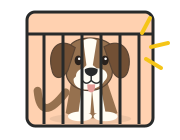
Seconds later they turn around, look at the door, start wagging — and that little whine begins. The whine becomes a bark. The bark becomes a howl. Within a couple of minutes the neighbors are fairly sure something terrible is happening in your apartment.
That can go on for ten minutes. Twenty. Sometimes thirty. And eventually you cannot take it any more — you have a call to get on, or it simply breaks your heart — so you open the door. Your puppy naps on the couch instead.
And crate training feels completely ruined.
This is the protocol I give every one of my in-person clients. It is a checklist you run before your puppy goes into the crate, so that they are better acquainted with it and far less likely to sit in there crying.
First, the honest part: puppies cry in crates
I want to be straight with you before we start, because a lot of training content is not.
Puppies cry in crates. It is completely normal. This is not a guide to eliminating crying forever, today, and anyone promising you that is selling something.
What this will do is greatly reduce it — so that it happens much less often, and so that within a few weeks of consistency you get to a place where your puppy does not cry in the crate at all.
That version of life exists. It is very possible. It just does not arrive on day one. It takes time and consistency, and most of the owners who never get there are the ones who changed the plan on day three.
Why the crying happens in the first place
A lot of crate crying is anxiety, plain and simple. Your puppy is worried about their own safety. From where they are sitting, they are stuck in a little box.
And here is the part worth sitting with: if your puppy were in the wild and they got stuck, crying is the only thing that would bring their mother to come and find them. It is not manipulation and it is not bad behavior. It is a survival mechanism, and it is the single most effective one a young animal has.
So there is nothing here to feel guilty about. But a puppy who knows when they are going into the crate is far less likely to use it.
There is a second, more ordinary reason too, and it gets mistaken for the first one constantly. A lot of puppies have FOMO rather than separation anxiety — they do not have a genuine problem with being away from you, they just do not want to miss anything. They can see you in the kitchen. They can see you making food. They can see you sitting on the couch, and they would like to be there. So they stare at you, and they cry, and you look back — and now the two of you are having a conversation through eye contact, which is precisely the conversation you do not want to be having.
Knowing which of those two you are dealing with changes what you do next, and the checklist below handles both.
The checklist
1. Put the crate on a schedule
The first thing that helps, before any technique, is a schedule: your puppy goes into the crate and comes out of the crate at roughly the same times every single day.
Pick one or two blocks in the day and hold them. Nine in the morning until noon. Three in the afternoon until six. Whatever fits your life — the specific hours matter much less than the fact that they repeat.
Do the same at night. Your puppy goes into the crate at the same time every night, whether that is nine or ten. Again: pick what fits your schedule and then stop moving it.
A puppy who can predict the crate stops treating it as an ambush.
2. Empty the bladder first — on a leash
Make sure your puppy has had a real chance to go to the bathroom immediately before going in.
If you put a puppy in a crate on a completely full bladder, they are going to cry and they are going to scream — and they may well be telling you something true. Hey, I need to go. Let me out.
So here is how you do it properly. Put a leash on your puppy. Walk them to their potty area. Tell them to go potty, and then stand still and do not move. The moment they drop and go, say yes, give them a treat, and walk them straight to the crate.
Do that every time and it becomes habit: right before the crate, we go outside, because the crate means nap time is coming.
Two things people get wrong here.
The first is timing. Going potty two minutes before the crate is the ideal. Sometimes you will need ten, if your puppy is slow to get going — and you have to be patient, because occasionally that means standing outside for five minutes waiting.
The second is the leash, and I mean this even if you have a fenced yard. Off leash, a puppy wanders, gets the zoomies, goes completely feral, and comes back inside having forgotten the entire purpose of the trip. The leash keeps it boring and keeps it quick.
3. Cover the crate
Once your puppy is actually in, this is the fastest fix for the FOMO problem: throw a blanket over the crate.
Out of sight, out of mind. Your puppy cannot see anything, and not being able to see anything makes it dramatically easier for most puppies to relax. It also ends the eye-contact conversation, because there is nothing to make eye contact with.
4. Keep tossing treats in — even while they cry
For the first ten minutes or so, walk over to the crate every minute or two, move the blanket aside just enough to make a small opening, and toss a treat in.
Even if your puppy is crying.
I know exactly what you are thinking, because every client says it: why would I reward the crying?
You are not rewarding the crying, because food is not what the crying is for. Your puppy is not crying because they want a treat. They are crying because they want to be let out. The treat is not answering the demand — it is making the inside of the crate a place where good things appear.
Which brings us to the one rule that matters more than the other four put together.
5. Do not open the door to crying
The only reason to let a crying puppy out of the crate is if you genuinely believe they need the bathroom. And if you ran step two properly, you already know they do not.
So when you first put your puppy in and they cry for thirty straight minutes, the job is to make sure that door stays shut. Go to a different room. Put on noise-canceling headphones. Do your best to ignore it.
Every single time the door opens on a crying puppy, the crying gets a raise.
This is the step people fail, and they fail it at minute twenty-five of a thirty-minute protest — which teaches the most expensive possible lesson, that crying works but only if you really commit to it.
What progress actually looks like
Run all five and the pattern is usually the same.
The first few sessions are the worst of it. Then the crying gets shorter rather than quieter — twenty minutes becomes eight, eight becomes a grumble on the way in. Within a couple of weeks of genuine consistency, most puppies walk in, turn around once, and go to sleep.
If you are three weeks in with no change at all, something in the checklist is slipping. In my experience it is almost always the schedule — the crate hours drifted — or the door, opened once on a bad evening.
When the crying is telling you something else
One caveat worth stating plainly, because it is the thing the checklist does not fix.
Everything above assumes a puppy who would rather be with you. A dog in genuine distress at being left — one who panics, hurts themselves trying to get out, destroys bedding, soils a crate they otherwise keep clean — is dealing with something other than FOMO, and more crate time does not resolve it. That is worth a conversation with your vet and a trainer who can see the dog.
Honest crate crying is a protest. Distress looks different, and you will know.
Where to go next
If the crate is not your only battle right now, these two are the ones that usually travel with it:
- Crate crying — the full step-by-step fix, including the night-time schedule
- Potty accidents — because step two of this checklist is really a potty-training question wearing a different hat
And if you have tried all of this and your puppy still cries, that is worth saying out loud rather than suffering in silence. It is usually one small thing in the sequence.
Common questions
Is it cruel to let a puppy cry in the crate?
No, provided you have ruled out a real need first. Crying in a crate is a survival instinct, not suffering: a puppy separated from its litter cries because that is what brings its mother back. If your puppy has been out to the bathroom, is not hungry and the crate is a reasonable size, the crying is a protest rather than an emergency — and answering a protest by opening the door teaches your puppy that protesting works.
How long should I let my puppy cry in the crate?
Longer than feels comfortable, if you have genuinely worked through the checklist. The first few sessions can run 20 to 30 minutes. What matters far more than the length is that the door does not open while the crying is happening, because the moment it does you have taught the lesson you were trying to avoid.
At what age do puppies stop crying in the crate?
Age is not really the variable — consistency is. Most owners who put the crate on a schedule, empty the bladder first and stop opening the door to noise see a sharp drop inside a week or two, and silence within a few weeks. A six-month-old who has been let out for crying since eight weeks will still cry.
Should I cover my puppy's crate with a blanket?
Usually, yes. A great deal of crate crying is simply a puppy watching you walk around the kitchen and asking to join in. A blanket over the crate ends that conversation, and most puppies settle faster once there is nothing to look at. Leave airflow, and skip it if your puppy is a determined blanket-puller.
Why does my puppy cry in the crate at night but not during the day?
Almost always the bathroom. A young puppy cannot hold a full bladder for a whole night, so night crying is more likely to be a genuine request than daytime crying is. Take them out on a leash, keep it boring, no play and no talking, and put them straight back.
Want this as a plan, not an article?
Boop gives you Ethan McMahon’s filmed curriculum in order, daily homework for your dog, an AI coach that answers in his words, and a live call with him every week.